Showing posts with label Korean War. Show all posts

Monday, January 31, 2022

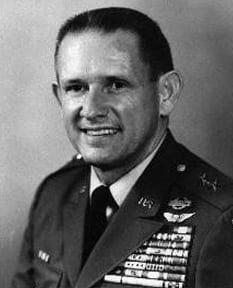
Special Operations legend John Singlaub has died at the age of 100

Retired Army Maj. Gen. John Singlaub, a decorated veteran of World War II, Korea, and Vietnam, and legendary special operator, died Jan. 29 at the age of 100.

Singlaub, a native of Independence, California, commissioned as a U.S Army infantry 2nd lieutenant. Following his graduation from the University of California Los Angeles in 1943. according to the Sandboxx military news website, Singlaub was quickly recruited by the Office of Strategic Services, the precursor to both the Central Intelligence Agency and U.S. Army Special Forces.

Will Irwin, a retired Army lieutenant colonel and author of “The Jedburghs: The Secret History of the Allied Special Forces, France 1944,” told Military Times that Singlaub parachuted behind German lines in Southern France as part of the OSS’ “Project Jedburgh.”

According to U.S. Army Special Operations Command, Singlaub was one of only 83 Americans selected for the program, along with 90 British, 103 French, 5 Belgian, and 5 Dutch operatives. Jedburgh operatives, working in teams no larger than four men or women, helped organize French resistance while also providing intelligence on and harassment of German lines of communication. Ultimately, Singlaub’s efforts helped Allied forces break out of Normandy during the summer of 1944.

Following the surrender of Germany in May 1945, Singlaub was transferred to the Pacific theater to continue OSS operations. On Aug. 27, 1945, Singlaub parachuted with an eight-man team onto the Chinese island of Hainan, where they rescued hundreds of Dutch and Australian prisoners of war. Following the surrender of Japan, Singlaub remained in the Pacific, continuing to report on the Chinese civil war.

In 1951, Singlaub, now a major, was again off to war in Korea. According to the Army Special Operations Forces Command Historian, From 1951-52, Singlaub served as the Deputy Commander and Chief of Staff of the Joint Advisory Commission, Korea. “JACK,” as it was known, represented the first time the CIA formed its first Clandestine Services field mission. In addition to recovering downed pilots, the shadowy organization attempted to replicate aspects of the OSS mission during the Second World War. After his tour with JACK, Singlaub commanded a conventional infantry battalion in Korea, where he was awarded the Silver Star for valor.

According to Sandboxx, in 1966, Singlaub once again returned to leading unconventional warfighters when he was selected to lead the Military Assistance Command Vietnam-Studies and Observation Group.

Commonly known as MACV-SOG or simply “SOG,” Singlaub was tasked with leading an organization comprised of special operators from all military branches as they fought North Vietnamese communist guerillas in both Vietnam and neighboring countries. A significant target of SOG was the Ho Chi Minh trail. This communist supply line existed mainly outside of Vietnam, thus technically off-limits according to the rules of engagement of the day. “As Chief SOG Jack fought the bureaucracy to get close air support for SOG teams. He fought with the State Dept. to have our teams better armed in Cambodia in the early days of the operation,” John Stryker Meyer, a SOG veteran, and Green Beret, told Sandboxx News. “He always cared deeply about the men who served under him.”

Irwin echoed Meyer’s comments about Singlaub’s dedication to those he served alongside. According to Irwin, in 1988, he received a call from Singlaub regarding Singlaub’s South Vietnamese counterpart from his time in SOG. After the war, the former South Vietnamese officer had settled in Los Angeles, California, and had lost his house to a fire. “[The RVN Officer] had lost everything,” Irwin told Military Times. “And one thing he lost that he cherished was his yearbook from the Command General Staff College.” Irwin found a replacement for Singlaub, and the gesture was symbolic of the kind of person, and leader Singlaub was. “It just struck me at the time how much he valued that relationship,” Irwin said.

Singlaub’s last command in the Army was as chief of staff of U.S. Army forces in South Korea. In 1977 he was relieved from this position after publicly criticizing then-President Jimmy Carter’s proposal to withdraw U.S. troops from Korea.

Over his career Singlaub received two Distinguished Service Medals, the Silver Star, two Legion of Merit, two Bronze Stars, the Soldier’s Medal, two Purple Hearts, two Bronze Star Medals, the Air Medal, the Combat Infantryman’s Badge, the Master Parachutist Badge and the Army Aviation Badge.

In 2006, Singlaub was inducted into the U.S. Army Ranger Hall of Fame, and in 2007 he was made a Distinguished Member of the Special Forces Regiment. In 2016, the U.S. Army Special Operations Command (USASOC) established the MG John K. Singlaub/Jedburgh Award to recognize exceptional members of the Army commando community.

Article from the Army Times

Thursday, June 25, 2020

25 June 1950 North Korean army invades South Korea

At approximately 4 a.m. (Korean Standard Time) on a rainy Sunday morning Democratic People's Republic of Korea Army (DPRK - North Korea) artillery and mortars open fire on Republic of Korea (ROK - South Korea) Army positions south of the 38th Parallel, the line then serving as the border between the two countries. The opening barrage is followed shortly by tank/infantry attacks at all points along the Parallel. At 11 a.m. North Korea announced a formal declaration of war and what is now known as "The Korean War" officially began. In this announcement North Korea claimed ROK forces on the Ongjin Peninsula attacked North Korea in the Haeju area (west) and their declaration of war was in response to this attack. This claim was bogus.

The United Nations Security Council was convened in a few hours and passed the UNSC Resolution 82 condemning the North Korean aggression unanimously. The resolution was adopted mainly because the Soviet Union, a veto-wielding power, had been boycotting proceedings since January, in protest that the Republic of China (Taiwan) and not the People's Republic of China held a permanent seat on the council.[47] President Truman had made a statement on June 27, 1950 ordering the United States air and sea forces to give the South Korean regime support. While the United Nations Security Council was convened and had been debating the issue from the invasion forward it only issued Resolution 83 on June 27 which definitively recommended member-states militarily assist the Republic of Korea. The Soviet Union's foreign minister accused the United States of starting armed intervention on behalf of the Republic of Korea before the Security Council was summoned to meet on June 27, and confronting the UN with a fait accompli.

After the first two months of war, South Korean Army (ROKA) and the US forces rapidly dispatched to Korea were on the point of defeat. As a result, the ROKA and US troops retreated to a small area behind a defensive line known as the Pusan Perimeter.

In September 1950, an amphibious UN counter-offensive was launched at Incheon, and cut off many KPA troops in South Korea. Those who escaped envelopment and capture were forced back north. UN forces invaded North Korea in October 1950 and moved rapidly towards the Yalu River—the border with China—but on 19 October 1950, Chinese forces of the People's Volunteer Army (PVA) crossed the Yalu and entered the war. The surprise Chinese intervention triggered a retreat of UN forces and Chinese forces were in South Korea by late December.

In these and subsequent battles, Seoul was captured four times, and communist forces were pushed back to positions around the 38th parallel, close to where the war started. After this the front stabilized and the last two years of fighting became a war of attrition, the war in the air, however, was never a stalemate. North Korea was subject to a massive U.S. bombing campaign. Jet fighters confronted each other in air-to-air combat for the first time in history, and Soviet pilots covertly flew in defense of their communist allies.

The fighting ended on 27 July 1953, when the Korean Armistice Agreement was signed. The agreement created the Korean Demilitarized Zone (DMZ) to separate North and South Korea, and allowed the return of prisoners. However, no peace treaty was ever signed, and the two Koreas are technically still at war, engaged in a frozen conflict. In April 2018, the leaders of North and South Korea met at the DMZ and agreed to work towards a treaty to formally end the Korean War.

Tuesday, June 9, 2020

RIP CSM Pete Morakon - Distinguished Member of the Regiment

Command Sergeant Major Peter (Pete) Morakon was born Oct. 15, 1931, in Wilkes Barre, Pa. He entered the Army in June 1949 and attended jump school at Fort Benning, Ga., in September of that year. CSM Morakon remained assigned to the jump school as cadre, obtaining the rank of corporal before his departure for the war in Korea in April 1951.

In Korea, he was assigned to the 187th Airborne Regimental Combat Team as an infantry squad leader and attained the rank of staff sergeant. Upon his return from Korea in September 1952, he was honorably discharged from the service and worked in his hometown for a year before returning to the Army in October 1953.

In March 1954, CSM Morakon was assigned to the 504th Airborne Infantry Regiment at Fort Bragg as a reconnaissance squad leader and attained the rank of sergeant. In October 1955, he returned to Korea and was assigned to the 32nd Infantry Regiment as an infantry platoon sergeant. Upon his return from Korea, he was assigned to numerous airborne units, including the 504th Airborne Infantry Regiment, the 503rd Airborne Infantry Battle Group and the 501st Airborne Infantry Battle Group, in which he attained the rank of sergeant first class.

In March 1963, CSM Morakon attended the Special Forces Operations and Intelligence Course before being assigned to the 5th Special Forces Group (Airborne). He went to Vietnam in March 1964 as a Special Forces detachment intelligence sergeant and returned as a team sergeant with Company C, 5th Special Forces Group (Airborne).

He was promoted to master sergeant in September 1965 and was subsequently assigned to 3rd Special Forces Group (Airborne) as a HALO team sergeant. In April 1968, he returned to the 5th Special Forces Group (Airborne) in Vietnam for a third combat tour.

In March 1970, he was promoted to sergeant major and served as company sergeant major with the 6th and 5th Special Forces Groups (airborne). In 1975, he was appointed to command sergeant major and assigned to the 71st Air Defense Artillery and later the 94th Air Defense Artillery Group in Germany.

CSM Morakon culminated his 30-year career in 1980 with the 7th Special Forces Group (Airborne) and retired as the command sergeant major of the U.S. Army John F. Kennedy Center for Military Assistance.

In 1984, CSM Morakon began work as a civilian test officer at the U.S. Army Airborne Board. He has served for the past 24 years testing new personnel parachutes and certifying U.S., foreign and commercial aircraft for personnel airdrop and bundle delivery.

CSM Morakon’s awards and decorations include the Legion of Merit, Bronze Star with “V” Device with one Oak Leaf Cluster, Purple Heart, Meritorious Service Medal, Army Commendation Medal with “V” Device with one OLC, Air Force Commendation Medal with one OLC, Vietnam Cross of Gallantry with palm, Vietnam Cross of Gallantry with silver star, Vietnam Cross of Gallantry with bronze star, Combat Infantryman Badge (2nd award), Master Parachutist Badge, Military Free-Fall Jumpmaster Badge and the Achievement Medal for Civilian Service. CSM Morakon and his wife, Geraldine, have two daughters, Susan and Jamie, and two beloved grandsons, Mark and Peter Joseph. He was inducted as a Distinguished Member of the Special Forces Regiment on 13 July 2007.  CSM Morakon passed away on 3 June 2020.

Article from SOC.mil

Wednesday, April 18, 2018

RIP - Legendary Green Beret Iron Mike Healy has crossed over

Maj. Gen. Michael D. Healy, 91, died Saturday in Jacksonville, Florida, according to officials. The general served in the military for 35 years, spending much of his career at Fort Bragg. A native of Chicago, Healy enlisted in the Army at the age of 19 at the end of World War II.

When he retired in 1981, Maj. Gen. Healy was the nation’s most senior Special Forces soldier. He was a veteran of wars in Korea and Vietnam, with his service in the latter spanning a decade and ending with him overseeing the withdrawal of troops from the country. And he was the inspiration for John Wayne’s character, “Col. Iron Mike Kirby,” in the 1968 film “The Green Berets.”

Maj. Gen. Healy is also a former commander of the U.S. Army John F. Kennedy Special Warfare Center and School at Fort Bragg. On Tuesday, the current commanding general of SWCS said Maj. Gen. Healy left an indelible mark on the organization. “Maj. Gen. Mike Healy is a true Special Forces legend, not only for his actions during war, but for his leadership and vision during a pivotal time in the Regiment’s history,” said Maj. Gen. Kurt L. Sonntag. “As the commander of the U.S. Army John F. Kennedy Special Warfare Center and School, then called the U.S. Army John F. Kennedy Center for Military Assistance, he streamlined training, and aligned it to deal with modern threats. During his tenure, he solidified the role and value of Army Special Operations to the Army and the Nation.” “We owe a debt of gratitude to him for his vision, leadership, and for the professionalism he brought to the force,” Maj. Gen. Sonntag added. “His passing is truly a loss that we all feel, and we’re keeping his loved ones are in our thoughts.”

Retired Sgt. 1st Class Cliff Newman, executive director of the Special Forces Association headquartered in Fayetteville, said Maj. Gen. Healy’s legacy would not be forgotten in the close-knit Special Forces community. “He was one of the first Americans to go into Vietnam and one of the last to leave,” he said. Newman said he was fortunate to meet Maj. Gen. Healy - “He just did some amazing things,” he said. “He was just an icon in Special Forces. Everyone knew who he was and he was just a presence — you knew you were talking to somebody who was somebody.”

Maj. Gen. Healy earned the nickname “Iron Mike” while serving as a young officer leading Army Rangers on combat patrols deep behind enemy lines in Korea in the early 1950s. According to the SWCS, then-Lt. Healy was commander of the 4th Airborne Ranger Company during an airborne operation at Munsan-Ni in South Korea. When a platoon under his command was pinned down and under heavy fire, he and four others weaved their way through trenches to hold the high ground until reinforcements arrived.

The nickname would follow Maj. Gen. Healy throughout his career, including during five tours — nearly eight years in all — in Vietnam.

Maj. Gen. Healy's numerous awards and decorations include: Combat Infantry Badge (two awards), Distinguished Service Medal (2 OLC), Silver Star (1 OLC), Legion of Merit (2 OLC), Distinguished Flying Cross, Bronze Star with "V" (Valor) Device (5 OLC), Air Medal with "V" Device (4 OLC), Army Commendation Medal (1 OLC), Navy Commendation Medal with "V" Device, Purple Heart Medal (1 OLC), twelve Decorations of Republic of Vietnam. He received Parachute badges from Republic of Vietnam, Thailand, Cambodia, Korea, Iran and Pakistan, as well as a Master Parachutist Badge from the U.S. Army. He is also a member of the Officer Candidate School Hall of Fame. Special Forces Association Chapter 37 in Chicago is named in Maj. Gen. Healy’s honor.

Maj. Gen. Healy is survived by his wife of 67 years, Jacklyn, and their sons Michael Jr., Daniel, Timothy, Sean, Kirk and Patrick. He also has 10 grandchildren and eight great grandchildren. His son, Sean, told the Florida Times-Union that he enjoyed hearing others speak of his father. “I would talk to people, and especially if they brought something up about the military, I would ask them if they had heard of Iron Mike,” Mr. Sean Healy said. “If they knew who that was I would let them go on for a while, and then I would say ‘that’s my dad.’”

Thursday, January 1, 2015

Korean War Chaplain Emil Kapaun - Medal of Honor

A monument was unveiled in Korea for Medal of Honor recipient Emil Kapaun who was a chaplain who was posthumously awarded the Medal of Honor for refusing to abandon troops during combat finally has been recognized with a monument in the country where he died more than six decades ago.


The dark gray granite stone, erected by U.S. Army Garrison Daegu in front of the Camp Walker chapel, includes an image of Capt. Emil Kapaun supporting an injured soldier and the inscription, “He paid the ultimate sacrifice and consecrated the soul of Korea.” The monument, about four feet tall, was unveiled Dec. 19.


It’s the first memorial on the Korean peninsula for Kapaun, who died in a prisoner of war camp in May 1951 after being captured at Unsan the previous November. Although U.S. forces were surrounded and ordered to evacuate, the Roman Catholic priest stayed behind to comfort the wounded, despite the certainty of capture, and made rounds even as hand-to-hand combat broke out between U.S. and Chinese troops.

“We need inspiration and motivation to continue to serve the country,” deputy garrison chaplain Maj. Moon Kim said of Kapaun’s legacy. “People get easily discouraged or demotivated. But we see those forefathers who have gone before us and died, and they inspire us.”

The chaplain, a native of Pilsen, Kan., was awarded the Medal of Honor in April 2013.

“This is the valor we honor today,” President Barack Obama said during the award ceremony, “an American soldier who didn’t fire a gun, but who wielded the mightiest weapon of all: a love for his brothers so pure that he is willing to die so that they might live.”

After being captured, Kapaun pushed aside a Chinese soldier who was about to execute a U.S. soldier, saving his life, according to the Congressional Medal of Honor Society. Before contracting dysentery and pneumonia and suffering from a blood clot in his leg, Kapaun ministered to other soldiers in the POW camp.

Kim said few South Koreans know Kapaun’s story, though some American troops have heard of him through spots on the American Forces Network or seen his picture in the Camp Walker chapel.

Kapaun Barracks and Kapaun Chapel in Kaiserslautern were named after the chaplain in 1955. Both have since been transferred to the Air Force and renamed Kapaun Air Station. A bust of the chaplain is also located outside the chapel.

Kapaun, whose body is thought to be buried in a mass grave, is being considered by the Vatican for sainthood.

Kim said the priest’s life is an inspiration for military chaplains, “especially when we deploy or go to other places.”

“He gave his life,” he said, so Kapaun is a motivation “to not complain, to do your best. We all need those kinds of heroes.”

The above story was by Ashley Rowland, Stars and Stripes, published 29 Dec 2014.  It's a good idea to click on this link and book mark Stars and Stripes, they have very good articles.    

Monday, July 21, 2014

Rangers in All-Black Company remember Korean service

From the official Army website, the gives credit to a little known unit from the Korean War - an all Black American Ranger Company - Hooah.

Soldiers with the Army's only all-black Ranger company fought bravely, endured extreme conditions, and served with distinction during the Korean War, according to the veterans and the Army's top NCO. Four members of the elite, segregated outfit -- the 2nd Ranger Infantry Company (Airborne) -- were guests of Sgt. Maj. of the Army Raymond F. Chandler III at a Twilight Tattoo here, June 25 that honored non-commissioned officers.

Picture - Korean War Army Rangers, from left to right, Donald Allen, Winston Jackson, Herculano Dias, and Richard Briscoe, talked about their service during the war in the Army's first and only segregated, all-black Ranger company, the 2nd Ranger Infantry Company (Airborne). The men are seen at a reception before a Twilight Tattoo at Joint Base Myer-Henderson Hall, Va., June 25, 2014.

The four men - see picture at right - Donald Allen, Richard Briscoe, Herculano Dias, and Winston Jackson -- proudly served in this historic company, Chandler said.

"I was fascinated by their incredible stories of heroism and danger in wartime and their continued service as mentors and trainers of young Soldiers at home stations," he said. Dias, a sergeant who served in the Army four years, noted the company was the "first and only all-black Airborne Ranger outfit" in the whole Army.

"We were the only all-black Ranger outfit to make a combat jump. We jumped March 23, 1951, in a place called Munsan-Ni, Korea," Dias said.

He recalled losing fellow members, seeing intense combat, and enduring the brutal winter. When he and his fellow Rangers arrived in Korea, in December 1950, snowfall accumulations were high and temperatures were sub-zero, Dias said.

"A lot of guys were evacuated for frostbitten feet because the equipment we had was not sufficient," he said.

Conditions were indeed brutal, Briscoe said. "It was colder than hell, man. It was real cold," he said. "When we got off the plane, it was 20-below zero, and we had to ride in open trucks, with no canvas over (them)," Briscoe said.

Soldiers made do with what they had to stay warm. "We had put up our pup tents, we're muddy, there's snow on the ground," he said. "We had to use our overcoat to put it on the ground and sleep on that. We slept in our clothes."

The men saw a lot of combat and had many casualties, Dias said. At one point, before replacements arrived, the outfit was down to 65 men, from 110, he said. "By the time we left there, we had lost 13 men and we saw a lot of action," Dias said. "We had nine guys receive Silver Stars, and 13 received the Bronze Star with the 'V' for valor."

Being an Airborne Soldier takes dedication, said Allen, who retired from the Army in 1967. Working hard, giving it your all and being considered the best are things Soldiers today should strive for, he said. "The Airborne Soldier is the best thing out there because you're going to have to do a little bit more to be a paratrooper," he said, recalling that hearing his men say he was the best first sergeant made him feel great.

"When you work hard and you hear one of the people who you are responsible for say that you're the best, you are the best. Try your best," Allen said. Jackson said he was in the first cycle of Soldiers to integrate at Fort Jackson, S.C. He recalled going into the Army on Oct. 4, 1950.

"For me, I moved up kind of fast," he said. "I came out a staff sergeant and wasn't in the service for (but) 23 months. You never know who is watching you."

Jackson said he would like to see military service be mandatory for all Americans -- it will "make you or break you," he said.

Briscoe, who was a corporal during the war, remembers when he volunteered to be in the company after hearing that Ranger sign-ups were taking place a few blocks away at battalion headquarters. "I jumped up off the bunk and went up there," he said. In a few days he was on his way to Fort Benning, Georgia, for Ranger training. Before long, he was in Korea.

The 2nd Rangers were officially inactivated Aug. 1, 1951. The men displayed exemplary courage and leadership; their service and sacrifice to the nation is impressive, Chandler said. "It reminded me that our Army has changed in many ways over the past 64 years, but some things have not changed; NCOs know that readiness is always our top priority," he said.

Thursday, March 13, 2014

Medal of Honor recipient Colonel Ola Lee Mize dies at 82

From an article posted by Anniston-Gadsen Alabama On-line news: Medal of Honor recipient and retired Special Forces Colonel Ola Lee Mize dies at 82

Col. Ola Lee Mize, who earned the Medal of Honor for his actions during the Korean War, died today at the age of 82. Mize, a native of Marshall County and resident of Gadsden, received the medal "for conspicuous gallantry and outstanding courage above and beyond the call of duty" in September 1954 for his actions on June 10, 1953 near Outpost Harry (Surang-ni, Korea) during an intense attack.

According to his citation, Mize, then a sergeant, rescued a wounded soldier during a heavy attack, established a defensive position despite being blown down by artillery and grenade blasts three times, and inflicted heavy casualties on enemy forces. He moved between bunkers, firing at the enemy and throwing grenades. All the while, witnesses said Mize shouted encouragement to his fellows. Later during the engagement, Mize killed 10 enemy soldiers while trying to retake a machine gun position, and radioed in artillery fire before helping direct a counterattack on enemy positions.

The citation lauded Mize for "valorous conduct and unflinching courage (that) reflect lasting glory upon himself and uphold the noble traditions of the military service." Mize later served three tours in Vietnam and retired in 1981. A section of Steele Station Road in Gadsden is named in his honor, as is a veterans park and public museum dedicated last year.

Watch the video below on Colonel Mize and his recollections from the Korean War.

)

Monday, July 29, 2013

60th Annniversary of Korean War Armistice

Saturday, July 27th, 2013 marked the 60th Anniversary of the Korean War Armistice that ended the active combat portion of Korean War.
A ceremony was held at the Korean War Veterans Memorial in Washington , DC. Picture at top left is SFA Chapter IX's own honorary member Roy Aldridge saluting during the ceremony.

Article by Amanda Sakuma on MSNBC.

President Obama thanked the 1.8 million Americans who risked their lives in the Korean War, and said the veterans who returned to the U.S. deserved a better homecoming than what they received 60 years ago. “Ask these veterans here today and many will tell you: compared to other wars, theirs was a different kind of homecoming,” Obama said in a speech at the Korean War Veterans Memorial on the National Mall.

In paying homage to a conflict sometimes referred to as the “Forgotten War,” Obama said unlike World War II, the Korean War did not galvanize the country, nor did it tear America apart as did the Vietnam War.

“Among many Americans tired of war, there was it seemed a desire to forget—to move on.” The war, which lasted from 1950-1953, ended 60 years ago Saturday with a truce signing. More than 36,000 Americans were killed in the conflict that pit U.S.-led United Nations and South Korean forces against North Korea and China .

Obama hailed the legacy left by those who fought in the battle, and said the 50 million South Koreans who live in freedom—a stark difference from their countrymen in the North—were proof of their victory. “Here in America , no war should ever be forgotten and no veteran should be overlooked,” Obama said Saturday.